Popular Articles

Future Transportation Technologies Beyond Self-Driving Cars
Future transportation goes far beyond self-driving cars. This in-depth guide explores emerging transportation technologies such as electric air mobility, autonomous logistics, hyperloop systems, smart roads, hydrogen transport, and mobility-as-a-service platforms. Learn how cities, governments, and companies are redesigning mobility as an integrated system combining vehicles, infrastructure, energy, and AI-driven coordination. With real-world examples, challenges, and practical recommendations, this article provides expert insight into how transportation will evolve over the next decade and what decision-makers should prepare for today.
Future Technologies

How Biotechnology and AI Are Merging
Biotechnology and artificial intelligence are rapidly converging to transform drug discovery, genomics, diagnostics, and synthetic biology. This in-depth guide explains how AI models analyze biological data, accelerate experimentation, and enable precision medicine at scale. Learn about real-world applications such as protein structure prediction, AI-driven drug design, and mRNA optimization, along with key challenges like data quality, regulation, and interdisciplinary collaboration. Designed for biotech leaders, researchers, and innovators seeking expert insight into how AI and biotechnology are merging to shape the future of life sciences.
Future Technologies

The Evolution of Sensors in a Hyper-Connected World
Sensors are the foundation of the hyper-connected world, powering IoT, smart cities, industrial automation, and AI-driven systems. This in-depth guide explores the evolution of sensor technology, from basic measurement devices to intelligent, networked components operating at massive scale. Learn about real-world applications, key challenges such as data quality, power constraints, and security, and practical strategies for building reliable sensor ecosystems. Designed for engineers, technology leaders, and decision-makers seeking expert insight into how sensors shape modern connected systems and future digital infrastructure.
Future Technologies

Smart Materials: The Technology You Don’t See Coming
Smart materials are transforming technology by embedding intelligence directly into matter. This in-depth guide explains how responsive materials such as shape-memory alloys, self-healing polymers, electrochromic glass, and piezoelectric systems work in real-world applications. Learn where smart materials already deliver measurable benefits, what challenges slow adoption, and how organizations can integrate them effectively. Designed for engineers, product leaders, and innovators seeking expert insight into the hidden technology that will shape the next decade of manufacturing, construction, healthcare, and energy systems.
Future Technologies

The Role of Robotics in Everyday Life by 2035
Robotics is set to become a normal part of everyday life by 2035, transforming homes, healthcare, retail, and urban services. This in-depth guide explores how service robots, collaborative systems, and autonomous machines will support daily activities, improve safety, and address labor shortages. Learn about real-world use cases, key challenges slowing adoption, and practical strategies for integrating robots into human-centered workflows. Designed for business leaders, policymakers, and technology professionals seeking expert insight into the future role of robotics in society.
Future Technologies

Space Technologies That Will Shape the Next Decade
Space technologies are entering a new era of commercialization and large-scale impact. This in-depth guide explores the space innovations that will shape the next decade, including reusable rockets, satellite mega-constellations, Earth observation analytics, in-orbit servicing, and lunar infrastructure. Learn about real challenges such as orbital congestion and regulatory gaps, along with practical solutions and case examples. Designed for policymakers, investors, and technology leaders, this article provides expert insight into how space technologies will transform global communications, security, and data-driven decision-making.
Future Technologies

How Nanotechnology Will Transform Medicine
Nanotechnology is reshaping the future of medicine by enabling targeted drug delivery, advanced diagnostics, and regenerative therapies at the cellular level. This in-depth guide explains how medical nanotechnology works, where it is already delivering real results, and what challenges still slow adoption. Learn about nanoparticle drug delivery, nanosensors, vaccine technology, and smart implants, along with real case examples, safety considerations, and regulatory insights. Designed for healthcare professionals, researchers, and decision-makers seeking practical, expert-level understanding of how nanotechnology will transform modern medicine.
Future Technologies

The Future of Energy Storage and Smart Grids
Energy storage and smart grids are reshaping the future of electricity systems worldwide. This in-depth guide explains how modern battery technologies, distributed energy resources, and intelligent grids work together to support renewable energy, improve resilience, and reduce costs. Learn about real-world use cases, key challenges slowing adoption, and practical solutions such as grid-scale batteries, virtual power plants, AI-driven forecasting, and market reforms. Designed for utilities, policymakers, and energy professionals, this article provides actionable insights into building a flexible, reliable, and sustainable power grid.
Future Technologies
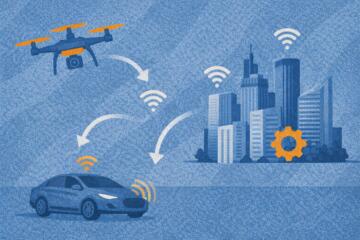
Autonomous Systems: From Drones to Self-Managing Cities
Autonomous systems are rapidly transforming industries—from delivery drones and self-driving vehicles to fully self-managing cities. This in-depth expert guide explains how autonomous systems actually work, the technologies behind them, and why many real-world implementations fail. Learn about key pain points, proven architectural solutions, edge AI, governance models, and real deployment cases from smart traffic systems to autonomous energy grids. With concrete examples, data, tools, and practical recommendations, this article is designed for decision-makers, engineers, and city planners looking to build safe, scalable, and reliable autonomous infrastructures.
Future Technologies
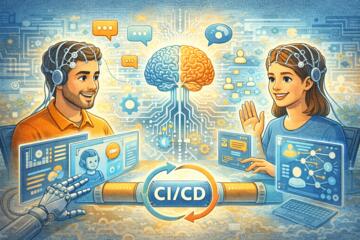
How Brain-Computer Interfaces Will Change Human Interaction
Brain-computer interfaces (BCIs) are moving beyond medical laboratories and into real-world applications that could fundamentally change how humans communicate, work, and interact with technology. From restoring movement and speech in patients with paralysis to enabling hands-free control of digital systems, BCIs promise faster, more intuitive interaction than keyboards, touchscreens, or voice assistants. This article explains how brain-computer interfaces work, where they already deliver measurable results, what limits their adoption today, and how they may reshape communication, accessibility, and human–machine collaboration over the next decade.
Future Technologies