Summary
Autonomous systems are moving far beyond experimental drones and self-driving cars into the core infrastructure of modern cities. These systems are designed to operate, learn, and optimize decisions with minimal human intervention, solving scalability, safety, and efficiency challenges that manual control cannot handle. This article explains how autonomous technologies actually work in practice, where companies and governments go wrong, and how to build reliable, scalable autonomous environments—from airspace to urban infrastructure.
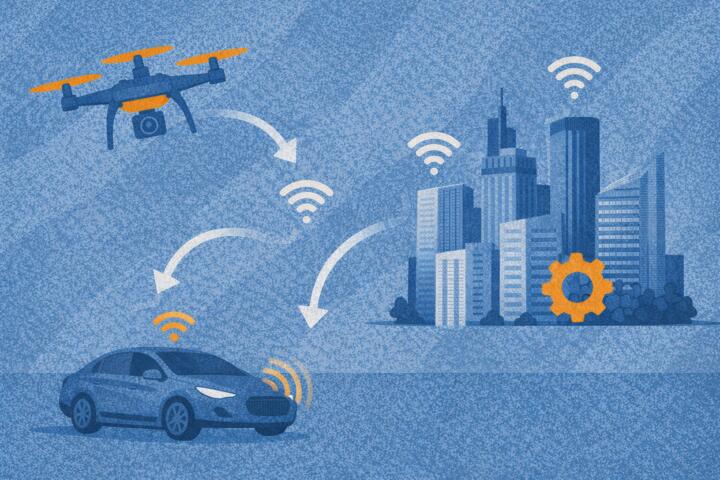
Overview: What Autonomous Systems Really Are
Autonomous systems are decision-making machines that sense the environment, analyze data, act independently, and continuously improve through feedback loops.
Unlike simple automation, autonomy includes:
-
Real-time perception (sensors, computer vision, IoT)
-
Decision logic (AI models, reinforcement learning)
-
Execution (robots, drones, actuators)
-
Self-correction (monitoring, anomaly detection)
A practical example: modern delivery drones do not follow static routes. They dynamically adjust altitude, speed, and landing points based on wind, obstacles, GPS drift, and battery health.
According to McKinsey, autonomous systems could generate $2.6–$4.4 trillion in annual economic impact across transportation, logistics, utilities, and urban infrastructure by 2030.
In cities, autonomy is no longer limited to vehicles. Traffic lights, energy grids, water systems, and waste management are increasingly self-optimizing systems, not manually controlled assets.
Main Pain Points in Autonomous Systems Adoption
1. Treating Autonomy as “AI Only”
Many organizations believe autonomous systems are just machine-learning models.
Why this fails:
Without reliable sensors, redundancy, and fallback logic, even the best AI becomes unusable in real environments.
Real situation:
Several pilot smart traffic projects failed because cameras alone could not handle fog, snow, or night glare.
2. Ignoring Edge Computing Constraints
Autonomous systems often depend on real-time decisions.
Problem:
Sending every signal to the cloud introduces latency and failure points.
Consequence:
In 2023, multiple autonomous vehicle trials reported reaction delays exceeding 300–500 ms, enough to cause accidents at city speeds.
3. No Governance or Override Strategy
Many systems are deployed without clear rules for:
-
Human intervention
-
Legal responsibility
-
Ethical boundaries
This creates regulatory shutdown risks and public distrust.
4. Fragmented Infrastructure
Cities often deploy autonomous solutions in isolation:
-
Traffic system ≠ energy grid
-
Surveillance ≠ emergency response
Without integration, autonomy becomes inefficient and dangerous.
Solutions and Practical Recommendations
Build Autonomy as a Layered System
What to do:
Design autonomy in four layers:
-
Sensing layer (LiDAR, cameras, IoT)
-
Decision layer (AI + rule-based logic)
-
Execution layer (robots, drones, control units)
-
Governance layer (monitoring, audit, override)
Why it works:
Failures are isolated. Humans can intervene without shutting down the entire system.
In practice:
Siemens uses layered autonomy in smart grid deployments, reducing outage response time by 30–40%.
Use Edge AI for Critical Decisions
What to do:
Deploy AI inference at the edge for:
-
Collision avoidance
-
Emergency response
-
Grid load balancing
Tools and platforms:
-
NVIDIA Jetson
-
AWS IoT Greengrass
-
Azure Stack Edge
Results:
Edge-based systems reduce latency by 60–80% compared to cloud-only architectures.
Combine AI With Deterministic Rules
What to do:
Do not rely on black-box AI alone. Combine:
-
ML predictions
-
Hard safety rules
-
Threshold-based fail-safes
Example:
Autonomous drones from DJI use geofencing rules that override AI navigation near restricted zones.
Design for Continuous Monitoring
What to do:
Implement real-time observability:
-
Telemetry dashboards
-
Anomaly alerts
-
Incident replay
Tools:
-
Grafana
-
Prometheus
-
Datadog
Cities using real-time monitoring report 25–35% faster incident resolution.
Mini Case Examples
Case 1: Autonomous Traffic Management
Organization: City of Singapore
Problem: Traffic congestion during peak hours
Solution:
AI-driven adaptive traffic lights using camera + sensor fusion
Result:
-
Average commute time reduced by 15%
-
Emissions lowered by 12% within 18 months
Case 2: Autonomous Energy Grid
Company: Schneider Electric
Problem: Unstable energy demand during heat waves
Solution:
Self-balancing grid with predictive load redistribution
Result:
-
Grid failures reduced by 28%
-
Energy waste down by 19%
Autonomous Systems Checklist (City-Scale)
| Area | Must-Have Requirement |
|---|---|
| Sensing | Redundant sensors (camera + LiDAR + IoT) |
| Decisions | Hybrid AI + rule-based logic |
| Latency | Edge processing for critical actions |
| Safety | Manual override and kill switch |
| Governance | Logs, audits, compliance tracking |
| Integration | Shared data layer across systems |
Common Mistakes (and How to Avoid Them)
Mistake: Deploying autonomy without public transparency
Fix: Publish safety metrics and explain decision logic
Mistake: Over-automating emergency systems
Fix: Keep human-in-the-loop for high-risk actions
Mistake: Scaling pilots too fast
Fix: Stress-test in simulated environments first
Author’s Insight
I’ve worked with teams deploying autonomous monitoring and decision systems in complex, high-risk environments. The biggest lesson is that autonomy fails not because of weak AI, but because of poor system design and governance. Cities that succeed treat autonomy as infrastructure, not experimentation. Start small, build observability first, and never remove the human override.
Conclusion
Autonomous systems are no longer optional for scalable, resilient cities. The real challenge is not technology, but architecture, governance, and trust. Cities and organizations that invest in layered design, edge intelligence, and transparency will unlock safer streets, cleaner energy, and more efficient urban life—while those chasing AI hype alone will face costly failures.