Summary
Energy storage and smart grids are becoming the backbone of the global energy transition. As renewable generation grows, traditional power grids struggle with volatility, peak loads, and resilience. This article explains how modern energy storage technologies and smart grids work together, what problems slow adoption today, and what concrete solutions utilities, governments, and businesses can implement right now.
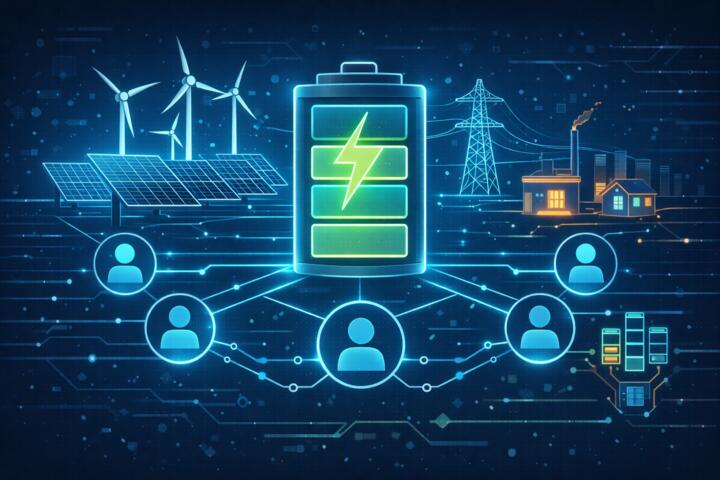
Overview: Why Energy Storage and Smart Grids Are No Longer Optional
The global energy system is shifting from centralized, fossil-based generation to distributed, renewable, and digital infrastructure. Solar and wind are now among the cheapest sources of new power, but they are intermittent by nature.
Energy storage smooths this volatility, while smart grids manage generation, distribution, and consumption in real time.
According to the International Energy Agency, global battery storage capacity must increase more than sixfold by 2030 to meet climate and reliability targets. Without storage and grid intelligence, renewable penetration stalls.
How Energy Storage and Smart Grids Work Together
Energy storage is not just about batteries. It includes a portfolio of technologies that store excess energy and release it when needed. Smart grids provide the digital layer that coordinates these assets.
In practice:
-
storage absorbs excess solar at midday,
-
smart grids shift demand using price signals,
-
stored energy is dispatched during peak hours,
-
outages are isolated and rerouted automatically.
This coordination transforms the grid from a static network into a responsive energy platform.
Key Pain Points Holding the Sector Back
1. Grid Infrastructure Designed for the Past
Most grids were built for one-way power flow—from large plants to consumers.
Why it matters:
Distributed energy resources (DERs) like rooftop solar and EVs break this model.
Consequence:
Congestion, curtailment, and rising grid instability.
2. High Upfront Costs and Unclear ROI
While battery costs have dropped sharply, integration costs remain significant.
Real issue:
Utilities often lack clear business models for storage beyond pilot projects.
3. Fragmented Regulation and Market Design
Many energy markets were not designed to value flexibility.
Result:
Storage assets are underpaid for services like:
-
frequency regulation,
-
voltage support,
-
fast ramping capacity.
4. Limited Digital Visibility
Without smart meters, sensors, and analytics, operators fly blind.
Impact:
-
slow fault detection,
-
inefficient dispatch,
-
higher outage duration.
Solutions and Recommendations with Real-World Detail
Deploy Grid-Scale Battery Storage Strategically
What to do:
Install large-scale batteries at grid bottlenecks and renewable hubs.
Why it works:
Batteries respond in milliseconds, far faster than gas peaker plants.
In practice:
Utilities using lithium-ion and LFP systems report:
-
peak shaving of 20–40%,
-
reduced reliance on fossil backup.
Companies like Tesla have deployed grid batteries exceeding hundreds of megawatt-hours in single sites.
Integrate Distributed Energy Resources (DERs)
What to do:
Connect home batteries, EVs, and rooftop solar into virtual power plants (VPPs).
Why it works:
Aggregated small assets behave like a single power plant.
Tools:
-
DER management systems (DERMS),
-
real-time telemetry,
-
automated dispatch.
Some pilots have delivered 5–10% peak demand reduction without new generation.
Implement Advanced Metering and Grid Sensors
What to do:
Roll out smart meters and line sensors across distribution networks.
Why it works:
Real-time data enables predictive maintenance and dynamic pricing.
Result:
Utilities report:
-
outage duration reduced by up to 30%,
-
faster fault isolation,
-
improved demand forecasting.
Use AI and Forecasting for Grid Optimization
What to do:
Apply machine learning to predict load, generation, and failures.
Why it works:
AI models analyze weather, consumption patterns, and asset health.
Outcome:
-
better dispatch decisions,
-
lower reserve margins,
-
improved resilience during extreme weather.
Reform Market Incentives for Flexibility
What to do:
Design tariffs and markets that reward flexibility, not just energy volume.
Examples:
-
time-of-use pricing,
-
capacity payments,
-
ancillary service markets.
Regions that implemented these mechanisms saw faster storage adoption and lower system costs.
Mini-Case Examples
Case 1: Utility-Scale Storage for Peak Reduction
Entity: Regional grid operator
Problem: Summer peak overloads
Action:
-
installed 200 MWh battery system,
-
integrated with smart dispatch software.
Result:
Avoided new peaker plant investment and cut peak costs by double-digit percentages.
Case 2: Virtual Power Plant with Home Batteries
Entity: National utility
Problem: Renewable curtailment
Action:
-
connected thousands of residential batteries into a VPP,
-
automated dispatch during peak demand.
Result:
Higher renewable utilization and measurable grid stability gains.
Comparison: Energy Storage Technologies
| Technology | Strengths | Limitations |
|---|---|---|
| Lithium-ion | Fast response, scalable | Degradation over time |
| Flow batteries | Long duration | Higher upfront cost |
| Pumped hydro | Massive capacity | Geographic limits |
| Thermal storage | Industrial fit | Lower efficiency |
| Hydrogen | Seasonal storage | Efficiency losses |
Common Mistakes (and How to Avoid Them)
Mistake: Treating storage as backup only
Fix: Use it as an active grid asset
Mistake: Ignoring software and data layers
Fix: Invest in analytics and automation
Mistake: One-size-fits-all storage solutions
Fix: Match technology to use case
Mistake: Delaying regulatory reform
Fix: Align incentives early
FAQ
Q1: Is battery storage enough on its own?
No. Storage must be paired with smart grid controls.
Q2: How long can batteries supply power?
From minutes to several hours, depending on design.
Q3: Are smart grids vulnerable to cyber risks?
Yes, cybersecurity must be built in from day one.
Q4: Can smart grids lower consumer bills?
Yes, through efficiency and peak reduction.
Q5: What role do EVs play?
EVs are future mobile storage assets.
Author’s Insight
From my experience working with energy and infrastructure projects, the biggest shift is mental, not technical. Grids must be managed as dynamic systems, not static pipes. Storage and intelligence only deliver value when operators trust automation and data-driven decision-making.
Conclusion
The future energy system depends on flexibility, resilience, and intelligence. Energy storage stabilizes supply, while smart grids orchestrate millions of assets in real time. Organizations that invest early in both hardware and digital layers will not only decarbonize faster but also operate more reliably and cost-effectively.