Summary
Artificial intelligence is no longer a niche skill reserved for engineers or data scientists. AI literacy—the ability to understand, evaluate, and work effectively with AI systems—is becoming a baseline career requirement across industries. This article explains what AI literacy really means, why traditional education and corporate training lag behind, and how professionals can build practical AI competence without becoming technical experts.
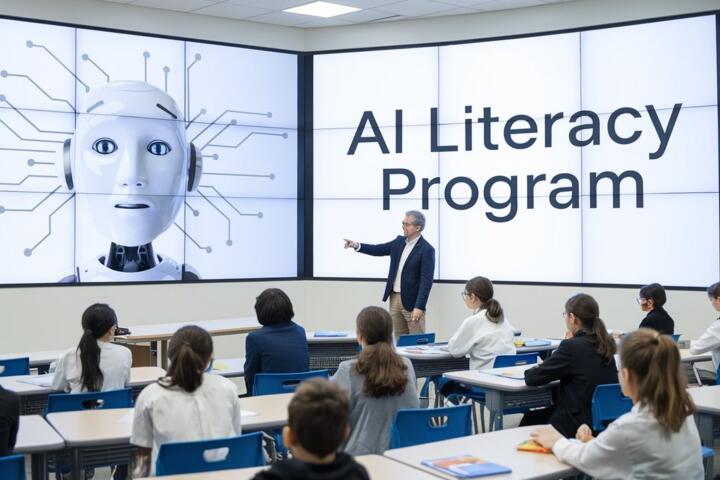
Overview: What AI Literacy Actually Means
AI literacy is not about writing machine learning algorithms or training neural networks. It is the practical understanding of how AI systems work, where they succeed, where they fail, and how to use them responsibly in real-world contexts.
In everyday work, AI literacy shows up when a marketing manager evaluates an AI-generated campaign, a lawyer reviews AI-assisted contract analysis, or a recruiter uses automated screening tools without blindly trusting outputs. According to World Economic Forum, AI-related skills are among the fastest-growing job requirements globally, even in roles traditionally considered “non-technical.”
A recent survey by McKinsey & Company found that over 70% of companies already use AI in at least one business function, yet fewer than half of employees understand how those systems influence their decisions.
Pain Points: Why AI Literacy Is Missing in Most Careers
1. Confusing AI Literacy with Technical Expertise
Many professionals assume AI is “for engineers only.”
Why this is wrong:
Most AI-powered tools are already abstracted behind user-friendly interfaces.
Consequence:
Non-technical teams use AI blindly or avoid it altogether.
2. Overreliance on AI Outputs
AI is often treated as an authority rather than a tool.
Why it matters:
AI systems can hallucinate, reinforce bias, or misinterpret context.
Real outcome:
Poor decisions with high confidence.
3. Fear of Job Replacement
AI literacy is often framed as a threat.
Reality:
AI replaces tasks, not entire professions.
Cost of fear:
Professionals delay upskilling until it’s too late.
4. Lack of Ethical Awareness
Many users don’t understand data bias, privacy risks, or model limitations.
Impact:
Legal exposure, reputational damage, and loss of trust.
5. Training Focused on Tools, Not Concepts
Organizations train employees on which buttons to click, not why the system behaves the way it does.
Result:
Shallow adoption with minimal productivity gains.
Solutions and Recommendations: How to Build AI Literacy
Learn How AI Makes Decisions
What to do:
Understand basic concepts like training data, pattern recognition, and probabilistic outputs.
Why it works:
It helps you evaluate results instead of trusting them blindly.
In practice:
Ask: What data trained this model? What is it optimized for?
Tools:
Introductory courses from Coursera, Google AI Essentials, IBM SkillsBuild.
Develop Prompt and Input Literacy
What to do:
Learn how input framing affects AI output.
Why it works:
AI systems respond differently to vague versus structured instructions.
Example:
Clear constraints and context can improve output quality by 30–50%.
Tools:
ChatGPT, Claude, Microsoft Copilot.
Practice Human-in-the-Loop Decision Making
What to do:
Always combine AI recommendations with human judgment.
Why it works:
AI excels at pattern detection; humans excel at context and ethics.
Real-world use:
AI drafts, humans approve.
Understand AI Limitations and Risks
What to do:
Learn about bias, hallucinations, and overfitting.
Why it matters:
Prevents costly mistakes.
Practical step:
Cross-check critical outputs with independent sources.
Apply AI to Real Workflows
What to do:
Use AI to automate repetitive tasks, not core judgment.
Examples:
-
Drafting reports
-
Data summarization
-
Initial research
Result:
Time savings of 20–40% in many knowledge roles.
Build Continuous AI Learning Habits
What to do:
Treat AI literacy as an evolving skill.
Why it works:
AI capabilities change faster than traditional software.
Mini-Case Examples
Case 1: Marketing Team Upskilling
Company:
Mid-sized e-commerce brand
Problem:
Low ROI from AI-powered ad tools.
What they changed:
Trained marketers on AI bias, prompt structuring, and output evaluation.
Results:
-
25% higher campaign conversion
-
Fewer wasted ad budgets
-
Faster experimentation cycles
Case 2: Legal Operations Team
Industry:
Corporate legal services
Problem:
Inconsistent AI-assisted contract reviews.
Solution:
Introduced AI literacy workshops focusing on limitations and verification.
Outcome:
-
Reduced review time by 35%
-
Fewer false positives
-
Increased trust in AI-assisted workflows
Checklist: Core AI Literacy Skills
| Skill Area | What You Should Know | Why It Matters |
|---|---|---|
| AI basics | How models learn | Avoid blind trust |
| Prompting | Structuring inputs | Better outputs |
| Bias awareness | Data limitations | Ethical decisions |
| Verification | Cross-checking | Risk reduction |
| Application | Workflow automation | Productivity |
| Ethics | Responsible use | Trust & compliance |
Common Mistakes (and How to Avoid Them)
Mistake: Treating AI as a black box
Fix: Learn core concepts
Mistake: Using AI without verification
Fix: Implement human review
Mistake: Focusing only on tools
Fix: Learn principles, not platforms
Mistake: Ignoring ethical implications
Fix: Include ethics in training
FAQ
Q1: Do I need coding skills to be AI literate?
No. Conceptual understanding is far more important.
Q2: Is AI literacy relevant outside tech roles?
Yes. HR, finance, law, marketing, and healthcare all rely on AI.
Q3: How long does it take to become AI literate?
Basic literacy can be achieved in weeks; mastery is ongoing.
Q4: Can AI literacy protect my job?
It significantly increases adaptability and career resilience.
Q5: Is AI literacy the same as data literacy?
They overlap, but AI literacy focuses on decision systems and automation.
Author’s Insight
After working with teams across business, education, and technology, I’ve seen a clear pattern: the most valuable professionals are not AI experts, but AI-literate decision makers. They know when to trust AI, when to question it, and how to integrate it responsibly into workflows. This skill separates those who are replaced by automation from those who lead it.
Conclusion
AI literacy is no longer optional. As AI systems shape decisions across industries, understanding how they work—and how they fail—becomes a core career requirement. Professionals who invest in AI literacy today will remain relevant, credible, and in control tomorrow.