Summary
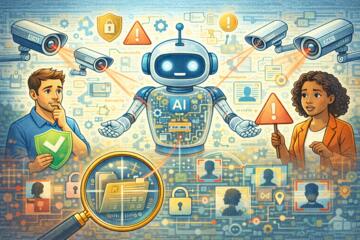
As AI systems increasingly influence decisions in healthcare, finance, hiring, and public services, trust and accountability have become critical success factors—not optional ethics add-ons. This article explains why many AI deployments fail to earn trust, how accountability breaks down in real-world systems, and what organizations must do to design AI that people can rely on. It is written for executives, product leaders, engineers, and policymakers responsible for deploying AI at scale.
Overview: What Trust and Accountability Mean in AI
Trust in AI does not mean blind acceptance. It means predictability, transparency, and the ability to challenge outcomes.
Accountability, in turn, answers a simple question: who is responsible when an AI system causes harm, makes a mistake, or produces biased results?
In practice, these concepts overlap:
-
Users trust systems they can understand and question
-
Regulators demand clear accountability chains
-
Organizations need both to scale AI sustainably
A 2024 global survey found that over 60% of users distrust AI-driven decisions when no human oversight or explanation is provided, even if accuracy metrics are high.
Pain Points: Why Trust Breaks Down in AI Systems
1. Opaque Decision-Making
What goes wrong:
Many AI models operate as black boxes.
Why it matters:
When users cannot understand why a decision was made, they assume unfairness or error.
Real situation:
Credit applicants denied loans without explanation lose trust—even if the model is statistically accurate.
2. Diffused Responsibility
Problem:
AI decisions often involve developers, data providers, platform owners, and end users.
Consequence:
When something fails, accountability becomes unclear.
Result:
Delays in remediation, legal disputes, and reputational damage.
3. Overreliance on Accuracy Metrics
Common mistake:
Teams focus on precision, recall, or AUC scores.
Missing piece:
Fairness, robustness, and user impact.
Outcome:
Highly accurate systems that still cause harm in edge cases.
4. Lack of Human Oversight
Issue:
Fully automated decisions without review mechanisms.
Why dangerous:
AI cannot understand context, intent, or moral nuance.
Example:
Automated content moderation removing legitimate speech.
5. Poor Communication With Users
What happens:
Users are not informed when AI is involved.
Impact:
Once discovered, trust drops sharply.
Transparency after the fact rarely restores confidence.
Solutions and Recommendations (With Practical Detail)
1. Make Explainability a Product Feature
What to do:
Design explanations as part of the user experience, not a technical afterthought.
How it works in practice:
-
Reason codes for decisions
-
Confidence ranges
-
Feature influence summaries
Result:
Users accept decisions more readily—even negative ones—when explanations are clear.
2. Establish Clear Accountability Chains
Why it works:
Someone must always be responsible for outcomes.
Implementation:
-
Assign AI system owners
-
Document decision boundaries
-
Define escalation paths
Best practice:
If a decision affects rights, money, or safety, accountability must be explicit.
3. Keep Humans in the Loop Where It Matters
What to do:
Use AI to assist, not replace, human judgment in high-impact decisions.
Examples:
-
Medical diagnosis support
-
Hiring shortlists
-
Fraud detection alerts
Benefit:
Reduces error severity and increases user confidence.
4. Audit Models Continuously, Not Once
Why audits fail:
One-time validation ignores data drift and changing environments.
Effective approach:
-
Ongoing bias monitoring
-
Performance checks by subgroup
-
Stress testing edge cases
Outcome:
Early detection of trust-eroding failures.
5. Align AI Governance With Business Risk
What to change:
Treat AI risk like financial or cybersecurity risk.
Tools:
-
Risk registers
-
Incident reporting
-
Executive oversight committees
Result:
Trust becomes a strategic asset, not a compliance burden.
Mini-Case Examples
Case 1: AI Hiring Tools Under Scrutiny
Company: Amazon
Problem:
An experimental hiring algorithm favored certain demographic profiles.
What went wrong:
Training data reflected historical bias.
Result:
Project was discontinued, highlighting the need for accountability in data selection and model oversight.
Case 2: Facial Recognition and Public Trust
Organization: IBM
Challenge:
Public concern over facial recognition misuse.
Action:
IBM exited the general-purpose facial recognition market.
Outcome:
Demonstrated that accountability sometimes means choosing not to deploy technology.
Comparison Table: Trust-Building Approaches
| Approach | User Trust | Legal Risk | Scalability |
|---|---|---|---|
| Black-box automation | Low | High | Short-term |
| Partial transparency | Medium | Medium | Medium |
| Explainable + accountable AI | High | Low | Long-term |
Organizations investing early in trust scale more sustainably.
Common Mistakes (And How to Avoid Them)
Mistake: Assuming users trust accuracy alone
Fix: Pair accuracy with explainability
Mistake: No clear AI ownership
Fix: Assign named system owners
Mistake: Treating audits as compliance theater
Fix: Tie audits to real decision changes
Mistake: Hiding AI usage
Fix: Be transparent from the start
FAQ
Q1: Can AI systems ever be fully trustworthy?
No system is perfect, but trust increases with transparency, oversight, and accountability.
Q2: Is explainable AI always required?
For low-risk use cases, less explanation may suffice. High-impact decisions require more.
Q3: Who is legally responsible for AI mistakes?
Currently, responsibility usually falls on the deploying organization.
Q4: Does accountability slow down innovation?
In the short term, yes. In the long term, it enables sustainable adoption.
Q5: How do regulators view AI accountability?
Regulators increasingly expect documented governance and human oversight.
Author’s Insight
In real deployments, trust rarely fails because of one big error. It erodes through small, unexplained decisions users cannot challenge. The strongest AI systems I’ve seen succeed not because they are the smartest, but because they are accountable by design and humble about their limitations.
Conclusion
Trust and accountability determine whether AI becomes a sustainable foundation or a short-lived experiment. Systems that explain decisions, define responsibility, and respect human oversight earn acceptance—even when they fail. Those that hide behind complexity lose trust quickly and permanently.