Summary
Innovation moves faster than regulation, but unregulated innovation creates long-term risk—for users, companies, and entire markets. Governments struggle to keep pace, while businesses fear that excessive rules will slow growth and competitiveness. This article explains how innovation and regulation can coexist, why extreme approaches fail, and what practical models actually work in real industries.
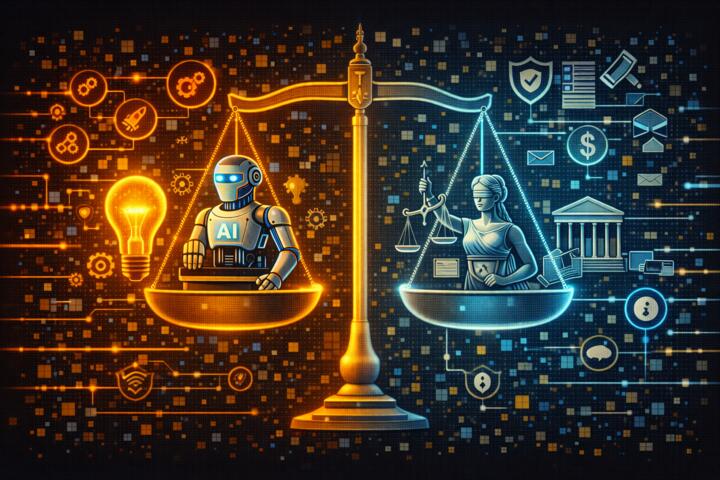
Overview: Why Innovation and Regulation Are in Constant Conflict
Innovation thrives on speed, experimentation, and uncertainty. Regulation is designed for stability, predictability, and risk reduction. These goals naturally collide.
In the last decade, emerging technologies—AI, fintech, biotech, digital platforms—have outpaced traditional legal frameworks by years. For example, by the time comprehensive AI regulation discussions began in the EU, generative AI systems were already deployed at global scale.
A recent industry analysis showed that over 60% of tech companies delay product launches due to regulatory uncertainty, while nearly 70% of regulators admit they lack technical expertise to assess new technologies properly.
The problem is not regulation itself. The problem is how regulation is designed and implemented.
Pain Points: What Goes Wrong in Practice
1. Regulation That Reacts Too Late
What happens:
Rules are written after damage has already occurred.
Why it matters:
Late regulation creates public backlash and overcorrection.
Real outcome:
Sudden bans, rushed compliance rules, and market instability.
2. One-Size-Fits-All Legal Frameworks
Mistake:
Applying the same regulatory model across different industries and maturity levels.
Consequence:
Startups face the same burden as global corporations.
Result:
Innovation concentrates in large players that can afford compliance.
3. Overregulation Driven by Fear
Public pressure often pushes lawmakers to act fast rather than smart.
Example:
Blanket restrictions on data use that unintentionally harm research, healthcare, and education.
4. Innovation Without Accountability
On the other extreme, lack of regulation enables harmful behavior.
Consequences:
-
Privacy violations
-
Algorithmic bias
-
Market manipulation
Unregulated innovation erodes trust, which eventually slows adoption.
5. Regulatory Capture and Lobbying
Large companies shape rules to protect their market position.
Effect:
Barriers to entry increase, competition decreases.
Solutions and Recommendations: How to Balance Speed and Safety
1. Shift From Rule-Based to Principle-Based Regulation
What to do:
Define outcomes instead of rigid technical rules.
Why it works:
Principles remain relevant even as technology changes.
In practice:
Instead of regulating specific AI models, regulate:
-
Transparency
-
Accountability
-
Auditability
Result:
Innovation continues without legal dead ends.
2. Regulatory Sandboxes for High-Risk Innovation
What it is:
Controlled environments where companies test innovations under regulatory supervision.
Why it works:
-
Regulators learn in real time
-
Companies reduce legal risk
Where it’s used:
Fintech and healthcare innovation programs globally.
Impact:
Faster approval cycles and safer experimentation.
3. Risk-Based Regulation Instead of Blanket Rules
Approach:
Apply stricter rules only where harm potential is high.
Example:
Medical AI systems face more oversight than marketing automation tools.
Outcome:
Resources focus on real risks, not hypothetical ones.
4. Continuous Regulation, Not One-Time Laws
What to do:
Treat regulation as a living process.
Why:
Technology evolves faster than legislation.
How:
-
Periodic reviews
-
Built-in sunset clauses
-
Adaptive compliance requirements
5. Shared Responsibility Models
Key shift:
Move from “government vs business” to co-regulation.
Who participates:
-
Regulators
-
Companies
-
Independent auditors
-
Civil society
Benefit:
Higher trust and faster response to emerging risks.
Mini-Case Examples
Case 1: AI Governance in the European Union
Organization: European Union
Problem:
Rapid AI deployment with unclear legal boundaries.
What was done:
Introduction of the AI Act with a risk-tiered approach.
Result:
-
Clear compliance expectations
-
Reduced legal uncertainty
-
Continued AI investment across member states
Case 2: Digital Health Oversight
Organization: FDA
Problem:
Traditional approval processes were too slow for software-based medical tools.
Solution:
Adaptive frameworks for digital therapeutics and AI-driven diagnostics.
Outcome:
-
Faster approvals
-
Stronger patient safety controls
Comparison Table: Innovation-First vs Regulation-First Models
| Aspect | Innovation-Only | Regulation-Only | Balanced Model |
|---|---|---|---|
| Speed | High | Low | Moderate |
| Safety | Low | High | High |
| Trust | Fragile | Stable | Strong |
| Market Access | Unequal | Restricted | Inclusive |
| Long-Term Growth | Unstable | Slow | Sustainable |
Common Mistakes (and How to Avoid Them)
Mistake: Writing laws for specific technologies
Fix: Regulate impacts, not implementations
Mistake: Treating startups like enterprises
Fix: Scale compliance requirements
Mistake: Fear-driven bans
Fix: Pilot programs and data-driven evaluation
Mistake: No feedback loops
Fix: Continuous stakeholder engagement
FAQ
Q1: Does regulation always slow innovation?
No. Smart regulation reduces uncertainty and increases adoption.
Q2: Can innovation exist without regulation?
Short term, yes. Long term, trust erosion limits growth.
Q3: Who should regulate emerging technologies?
Governments, with strong input from technical experts.
Q4: How can startups survive heavy regulation?
Through proportional rules and sandbox access.
Q5: Is self-regulation enough?
No. It must complement formal oversight.
Author’s Insight
Working with regulated and unregulated tech markets showed me that the real enemy of innovation is not regulation—it’s unclear regulation. Companies can adapt to rules, but they cannot adapt to ambiguity. The best ecosystems I’ve seen are those where regulators and innovators learn together instead of working in isolation.
Conclusion
Balancing innovation and regulation is not about choosing sides. It is about designing systems that allow progress without sacrificing trust, safety, and fairness. The future belongs to adaptive regulation that evolves alongside technology—not after the damage is done.