The Future of Wearable Tech: Beyond Fitness Trackers

3 min read

415

When wearable technology first gained mainstream traction, it came in the form of simple fitness bands counting our steps and calories. Fast-forward a decade, and wearables are evolving into powerful personal ecosystems—blending health monitoring, immersive computing, emotional sensing, and even digital identity. The future of wearable tech goes far beyond counting steps; it’s reshaping how we interact with our bodies, environments, and society itself.

From smart contact lenses that monitor blood glucose to brain-computer interfaces that allow you to control devices with thought, wearables are no longer accessories. They are becoming extensions of the self—part digital, part biological, and entirely transformative. But as these technologies grow more intimate and powerful, they raise new questions about data, privacy, ethics, and dependence.

This article explores the next wave of wearable innovation, the forces driving it, and what lies beyond the wrist.


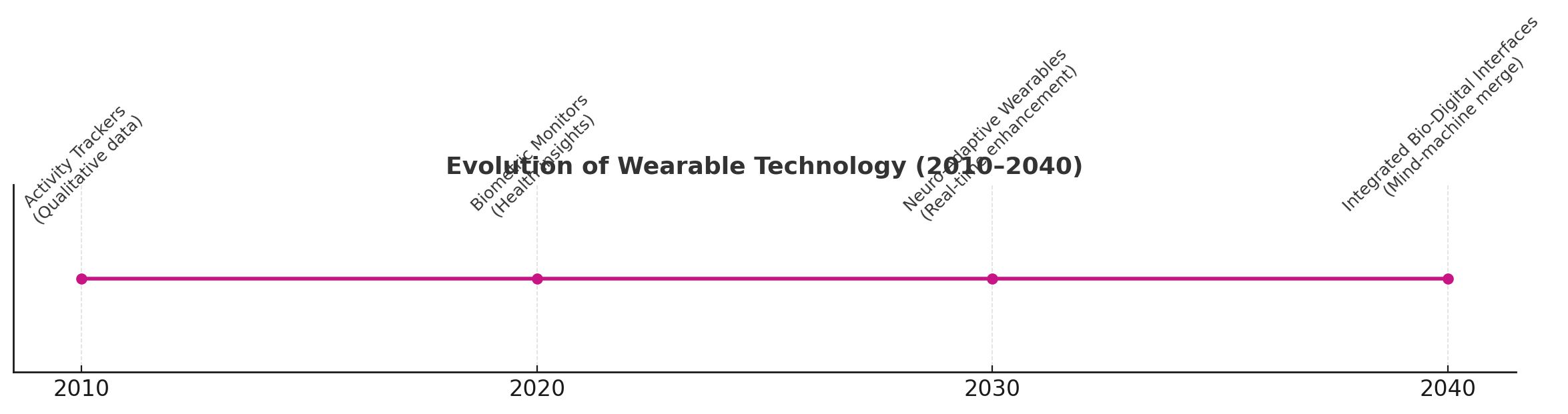
🧬 Phase 1 → Phase 3: The Evolution of Wearables

Wearable technology is evolving through three major stages:

  1. Quantify – Tracking external activity (steps, heart rate)

  2. Analyze – Interpreting internal signals (sleep, stress, oxygen)

  3. Enhance – Intervening in real time (neural input, drug delivery, emotional AI)
🔮 What’s Coming Next?

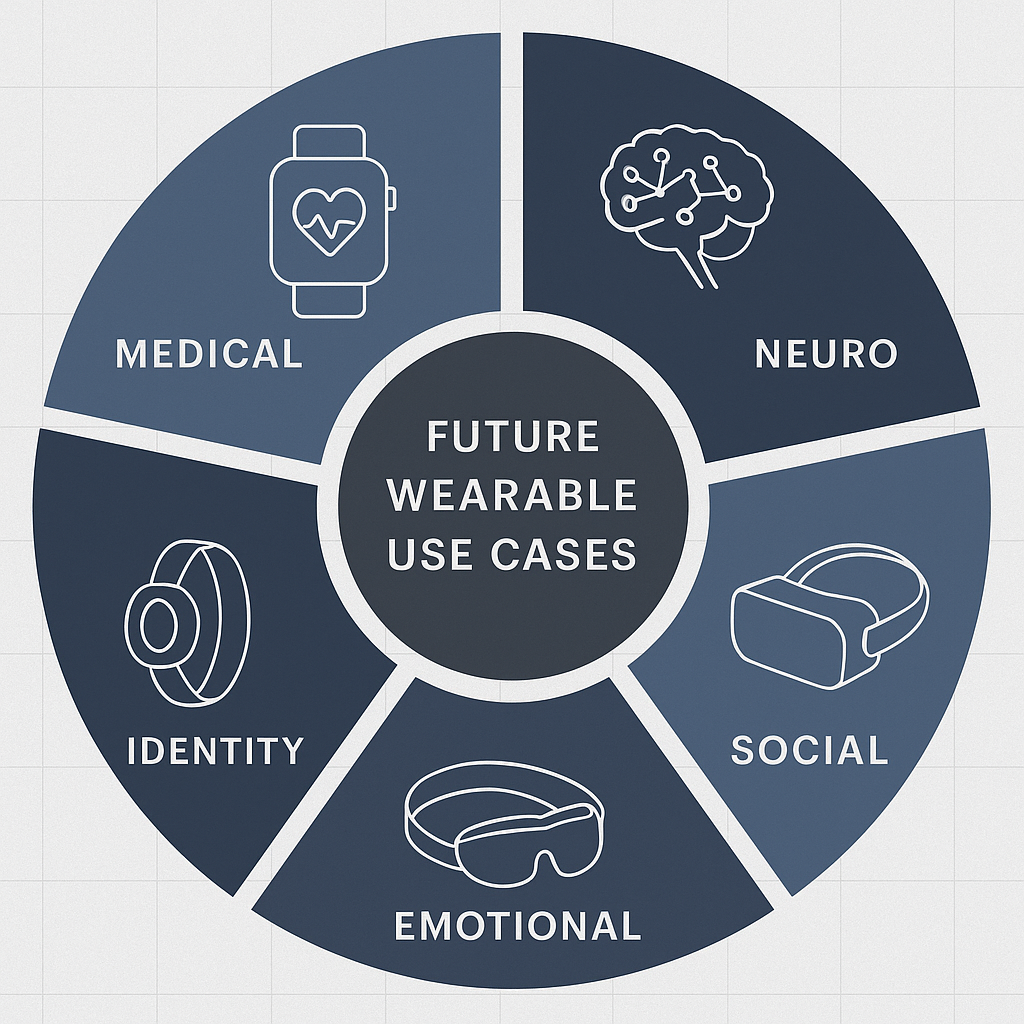
🧠 Brain-Machine Interfaces (BMIs)

Companies like Neuralink and Synchron are building devices that connect directly to the brain. Applications include:

  • Assisting paralyzed patients

  • Enhancing memory or attention

  • Controlling machines by thought

This marks the shift from monitoring to intervening and augmenting.

🩺 Medical-Grade Wearables

Wearables are moving from wellness gadgets to regulated medical tools:

  • Smart tattoos for continuous glucose monitoring

  • Skin patches for drug delivery

  • AI-enhanced ECGs that predict cardiac events

Hospitals may soon rely on your own wearable data more than in-clinic tests.

🧘 Emotion-Sensing and Mental Health

Next-gen wearables will track mood, stress, and attention using:

  • Skin conductance sensors

  • Heart-rate variability

  • Facial micro-expressions (in AR glasses)

They’ll nudge users toward healthier mental states—or, in commercial hands, optimize ad timing.

⚖️ Ethical Frontiers: When the Body Becomes a Platform

With this intimacy comes profound risk:

  • Privacy: Your biometric data could be sold or hacked.

  • Dependence: Overreliance on wearables may reduce bodily awareness.

  • Consent: Children and vulnerable populations may be “tracked by default.”

  • Equity: Will neuro-enhancement be available only to the wealthy?

Smart regulation and design ethics must evolve alongside the technology.
🧾 Conclusion: From Devices to Digital Organs

The future of wearables isn’t about gadgets—it’s about integration. As devices become smaller, smarter, and more embedded, they will evolve from external accessories into intimate interfaces between biology and technology.

But with great proximity comes great responsibility. The choices we make today—about standards, safeguards, and access—will shape not just what wearables can do, but what kind of human-machine relationship we ultimately want.


Latest Articles

The Role of Robotics in Everyday Life by 2035

Robotics is set to become a normal part of everyday life by 2035, transforming homes, healthcare, retail, and urban services. This in-depth guide explores how service robots, collaborative systems, and autonomous machines will support daily activities, improve safety, and address labor shortages. Learn about real-world use cases, key challenges slowing adoption, and practical strategies for integrating robots into human-centered workflows. Designed for business leaders, policymakers, and technology professionals seeking expert insight into the future role of robotics in society.

Future Technologies

Read » 192

Autonomous Systems: From Drones to Self-Managing Cities

Autonomous systems are rapidly transforming industries—from delivery drones and self-driving vehicles to fully self-managing cities. This in-depth expert guide explains how autonomous systems actually work, the technologies behind them, and why many real-world implementations fail. Learn about key pain points, proven architectural solutions, edge AI, governance models, and real deployment cases from smart traffic systems to autonomous energy grids. With concrete examples, data, tools, and practical recommendations, this article is designed for decision-makers, engineers, and city planners looking to build safe, scalable, and reliable autonomous infrastructures.

Future Technologies

Read » 435

How Nanotechnology Will Transform Medicine

Nanotechnology is reshaping the future of medicine by enabling targeted drug delivery, advanced diagnostics, and regenerative therapies at the cellular level. This in-depth guide explains how medical nanotechnology works, where it is already delivering real results, and what challenges still slow adoption. Learn about nanoparticle drug delivery, nanosensors, vaccine technology, and smart implants, along with real case examples, safety considerations, and regulatory insights. Designed for healthcare professionals, researchers, and decision-makers seeking practical, expert-level understanding of how nanotechnology will transform modern medicine.

Future Technologies

Read » 280

The Future of Energy Storage and Smart Grids

Energy storage and smart grids are reshaping the future of electricity systems worldwide. This in-depth guide explains how modern battery technologies, distributed energy resources, and intelligent grids work together to support renewable energy, improve resilience, and reduce costs. Learn about real-world use cases, key challenges slowing adoption, and practical solutions such as grid-scale batteries, virtual power plants, AI-driven forecasting, and market reforms. Designed for utilities, policymakers, and energy professionals, this article provides actionable insights into building a flexible, reliable, and sustainable power grid.

Future Technologies

Read » 482

Smart Materials: The Technology You Don’t See Coming

Smart materials are transforming technology by embedding intelligence directly into matter. This in-depth guide explains how responsive materials such as shape-memory alloys, self-healing polymers, electrochromic glass, and piezoelectric systems work in real-world applications. Learn where smart materials already deliver measurable benefits, what challenges slow adoption, and how organizations can integrate them effectively. Designed for engineers, product leaders, and innovators seeking expert insight into the hidden technology that will shape the next decade of manufacturing, construction, healthcare, and energy systems.

Future Technologies

Read » 420

The Evolution of Sensors in a Hyper-Connected World

Sensors are the foundation of the hyper-connected world, powering IoT, smart cities, industrial automation, and AI-driven systems. This in-depth guide explores the evolution of sensor technology, from basic measurement devices to intelligent, networked components operating at massive scale. Learn about real-world applications, key challenges such as data quality, power constraints, and security, and practical strategies for building reliable sensor ecosystems. Designed for engineers, technology leaders, and decision-makers seeking expert insight into how sensors shape modern connected systems and future digital infrastructure.

Future Technologies

Read » 172