The Role of Blockchain Beyond Crypto

3 min read

1

When most people hear "blockchain," they think of Bitcoin or Ethereum—volatile cryptocurrencies making headlines for their highs and crashes. But blockchain is not about getting rich quickly or mining coins. At its core, blockchain is a technological revolution in how we manage trust, ownership, and coordination online.

As we move deeper into the digital age, traditional systems for verifying identity, tracking ownership, and enforcing agreements are struggling to keep up. They’re centralized, prone to breaches, and often opaque. Blockchain offers a radically different approach—a decentralized, transparent, and tamper-proof way to store and share information. Its potential stretches far beyond finance into supply chains, healthcare, governance, and the very infrastructure of the future Internet.

Understanding blockchain beyond crypto is not just about learning a technology—it's about understanding the foundation of the next-generation digital society.

🧠 What Is Blockchain, Really?

At its simplest, blockchain is a distributed digital ledger. Instead of storing data in a single server or central database, it stores identical copies of information across a network of nodes. These nodes validate transactions using consensus mechanisms like proof-of-work or proof-of-stake.

Once added, data on the blockchain is:

  • Immutable – cannot be changed retroactively

  • Transparent – can be viewed and verified by anyone

  • Decentralized – no single authority controls it


🌐 Where Is Blockchain Being Used Now?

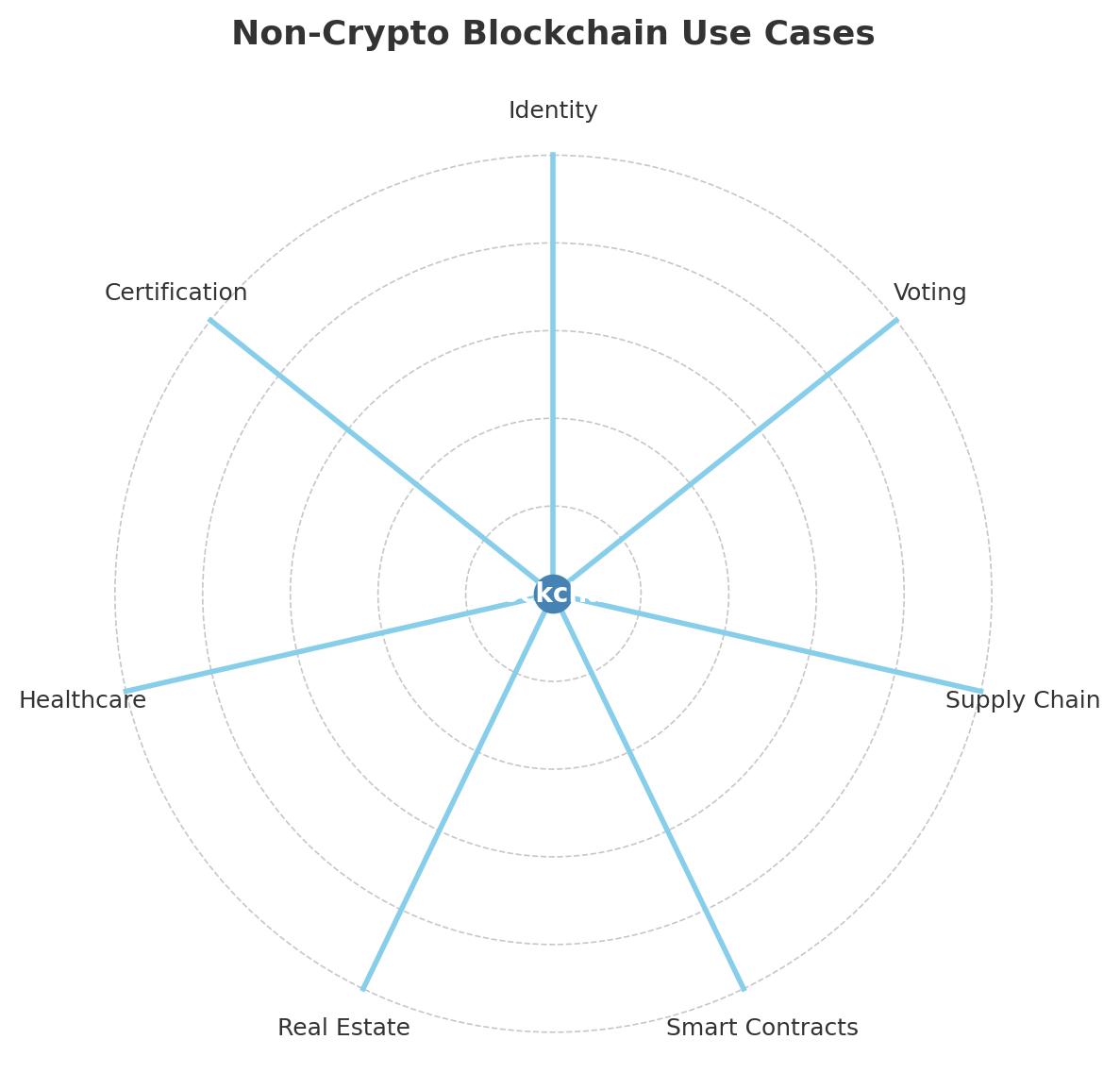
Here are some powerful use cases where blockchain is changing industries:

✅ Supply Chain Transparency

  • Projects like IBM Food Trust let companies trace every step of a product’s journey, from farm to shelf. This combats fraud, boosts consumer trust, and improves logistics.

✅ Decentralized Identity (DID)

  • Systems like Microsoft Entra and Sovrin let users control their own digital identity—without relying on Facebook or Google. You own your credentials and can prove things (like your age or degree) without revealing unnecessary personal info.

✅ Digital Voting

  • Pilots in countries like Estonia and Switzerland are testing secure, verifiable voting platforms on blockchain to fight fraud and boost participation.

✅ Smart Contracts

  • Platforms like Ethereum allow self-executing contracts: "If X happens, do Y." This eliminates the need for intermediaries in agreements—whether for insurance, rentals, or royalties.
📈 Blockchain's Future: Building the Next Internet

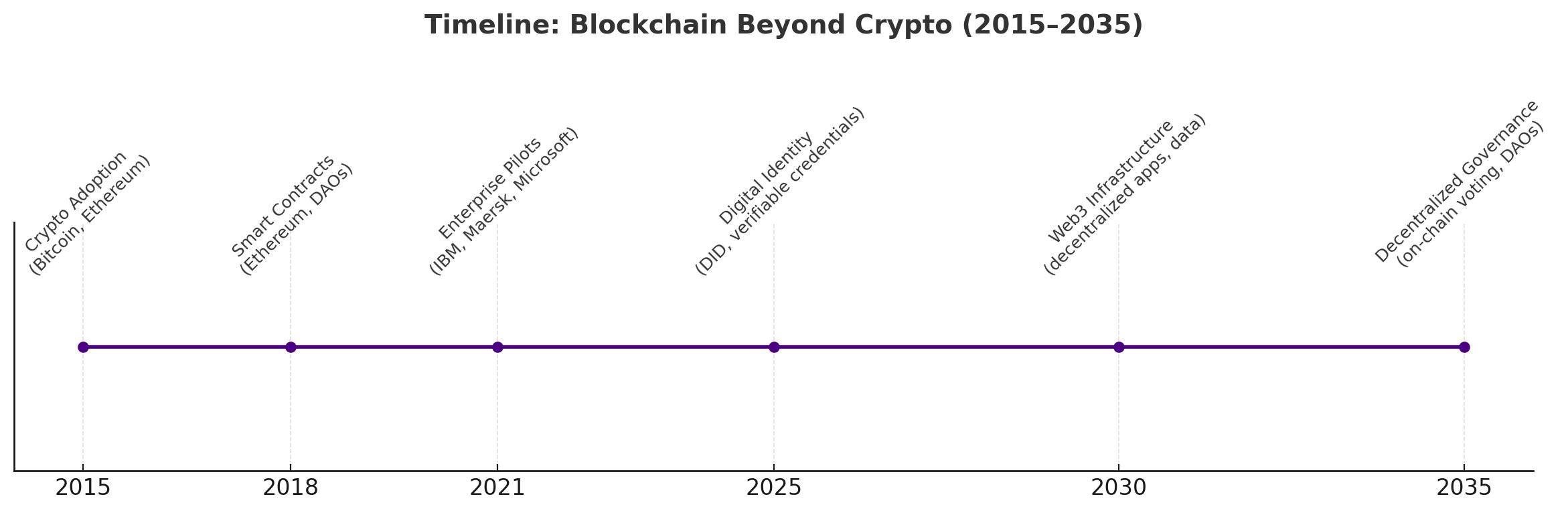
The long-term vision of blockchain isn’t limited to isolated use cases—it’s about rebuilding the infrastructure of the Internet itself.

This vision often overlaps with:

  • Web 3.0 – A decentralized web where users own their content, data, and identity.

  • Metaverse – Virtual worlds with user-owned assets secured via blockchain (e.g., NFTs).

  • Decentralized Finance (DeFi) – Replacing banks and brokers with code and communities.

These trends point toward a more user-centric, transparent, and interoperable digital ecosystem.
đŸ§Ÿ Conclusion: Rethinking Trust in the Digital Age

Blockchain isn't just a tool for speculative assets—it's a new foundation for trust in a digital-first world. By removing intermediaries, enabling verifiable ownership, and empowering users, blockchain is quietly transforming how we vote, verify, create, and collaborate.

As the technology matures, the most important applications may not be financial—but civic, educational, and social. Understanding blockchain beyond crypto means recognizing its role in building a more transparent, decentralized, and resilient Internet—for everyone.


Latest Articles

How Decentralization Will Reshape the Internet

Decentralization is reshaping the internet by shifting control from platforms to users and open protocols. This expert article explains how decentralization will change infrastructure, data ownership, identity, trust, and governance online. With real examples from blockchain platforms, decentralized exchanges, and distributed storage networks, it breaks down benefits, trade-offs, and practical steps for adopting decentralized systems realistically—without hype or ideology.

The Future of the Internet

Read » 0

From Web2 to Web3: What Changes for Users

The transition from Web2 to Web3 is changing how users interact with the internet, shifting power from platforms to individuals. This expert guide explains what actually changes for users, including ownership, identity, trust, payments, and governance. With real examples from platforms like MetaMask, Uniswap, OpenSea, and stablecoin ecosystems, the article breaks down benefits, risks, and practical steps for navigating Web3 safely and realistically—without hype or ideology.

The Future of the Internet

Read » 1

The Role of Blockchain Beyond Crypto

When most people hear "blockchain," they think of Bitcoin or Ethereum—volatile cryptocurrencies making headlines for their highs and crashes. But blockchain is not about getting rich quickly or mining coins. At its core, blockchain is a technological revolution in how we manage trust, ownership, and coordination online. As we move deeper into the digital age, traditional systems for verifying identity, tracking ownership, and enforcing agreements are struggling to keep up. They’re centralized, prone to breaches, and often opaque. Blockchain offers a radically different approach—a decentralized, transparent, and tamper-proof way to store and share information. Its potential stretches far beyond finance into supply chains, healthcare, governance, and the very infrastructure of the future Internet. Understanding blockchain beyond crypto is not just about learning a technology—it's about understanding the foundation of the next-generation digital society.

The Future of the Internet

Read » 1

Digital Privacy in a Hyperconnected World

In an era where nearly every action—from unlocking your phone to walking past a surveillance camera—leaves a digital trace, the notion of privacy is being redefined. We live in a hyperconnected world, where smartphones, smart homes, wearable devices, social platforms, and algorithms continuously collect, analyze, and monetize our personal data. While this connectivity enables convenience and personalization, it also comes at a cost: our digital privacy is under constant pressure.

The Future of the Internet

Read » 1

Cyber Sovereignty and the Fragmentation of the Web

The internet was once envisioned as a global commons—a borderless space for knowledge, communication, and commerce. But that vision is fraying. In its place emerges a new paradigm: cyber sovereignty—the idea that each nation has the right to control its portion of cyberspace much like it governs its territory. From Russia’s “sovereign internet” to China’s Great Firewall, and even Western debates over content moderation and data localization, a fragmented digital world is becoming not only possible—but inevitable. What does it mean when your experience of the internet depends on where you live, who governs you, and what servers you’re allowed to access? This trend carries major implications for freedom of expression, digital rights, economic innovation, cybersecurity, and global cooperation. And it’s not just political—it’s deeply technological.

The Future of the Internet

Read » 0

The Future of Search in an AI-Driven Web

Search is rapidly evolving in an AI-driven web, moving from keyword-based rankings to conversational, intent-driven answers. This expert article explores how AI is reshaping search behavior, SEO, and content discovery, with real examples from Google and Microsoft. It explains what breaks in traditional search models, how creators and businesses can adapt, and which strategies build visibility and trust when AI systems increasingly synthesize answers instead of listing links.

The Future of the Internet

Read » 0