Summary
The transition from Web2 to Web3 is not just a technical upgrade—it fundamentally changes how users own data, interact with platforms, and participate in digital economies. While Web2 optimized convenience and scale, Web3 introduces ownership, permissionless access, and programmable trust. This article explains what actually changes for users, where expectations often collide with reality, and how to approach Web3 pragmatically rather than ideologically.
Overview: Understanding Web2 vs. Web3 in Plain Terms
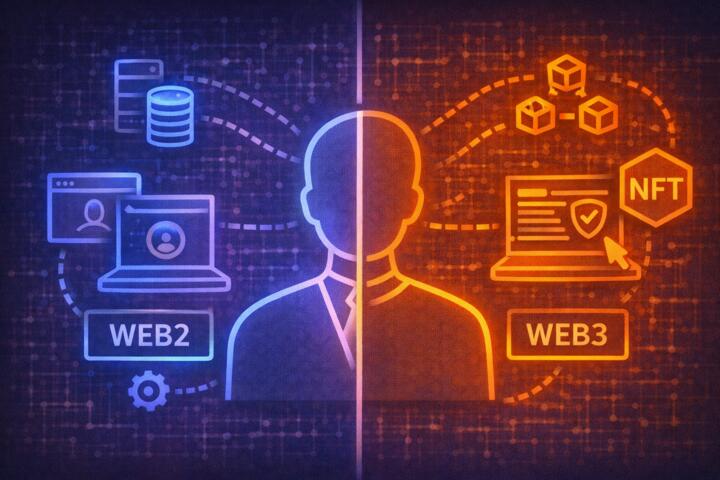
Web2 is the internet of platforms. Users create content and generate value, while companies own the infrastructure, data, and monetization. Social networks, marketplaces, and SaaS tools dominate this model.
Web3 shifts the architecture toward protocols. Instead of trusting a company, users interact with smart contracts and decentralized networks where ownership and rules are enforced by code.
In Web2:
-
You log in with email or Google.
-
Platforms store your data.
-
Accounts can be suspended or deleted.
In Web3:
-
You connect with a wallet.
-
You control private keys.
-
Assets and identities exist independently of a single platform.
As of 2024, more than 420 million people worldwide use crypto wallets at least once per year, indicating growing—though still early—user adoption of Web3 primitives.
Main Pain Points in the Shift From Web2 to Web3
1. Confusing Ideology With Usability
Many Web3 products assume users care deeply about decentralization.
Why this matters:
Most users care about speed, safety, and simplicity—not philosophy.
Consequence:
Products fail because onboarding is complex and unforgiving.
2. Security Responsibility Shifts to Users
In Web2, password resets and fraud protection are centralized.
In Web3:
-
Lost private keys mean lost assets.
-
Mistaken transactions are irreversible.
Real situation:
New users lose funds due to phishing or poor key management.
3. Fragmented User Experience
Web3 tools often lack the polish of Web2 platforms.
Impact:
Switching networks, managing gas fees, and signing transactions adds friction.
4. Overestimating Financial Upside
Many users enter Web3 expecting quick profits.
Result:
Speculation overshadows long-term utility and trust collapses during market downturns.
What Actually Changes for Users
Ownership: From Accounts to Assets
What changes:
In Web2, users rent access. In Web3, users own assets directly.
Example:
An NFT or token stored in a wallet belongs to the user regardless of which app they use.
Why it matters:
Ownership enables portability across platforms.
Platforms illustrating this shift:
-
MetaMask
-
Ledger
Identity: From Platform Profiles to Wallets
What changes:
Your wallet becomes your identity layer.
In practice:
The same address can be used across DeFi, NFTs, and DAOs.
Trade-off:
Pseudonymity increases privacy but complicates recovery and support.
Trust: From Companies to Code
What changes:
Users trust smart contracts instead of corporate policies.
Why this works:
Rules are transparent and enforceable.
Risk:
Bugs in code become systemic failures.
Example:
Decentralized exchanges like Uniswap operate without custodians, but users bear smart-contract risk.
Payments and Value Transfer
What changes:
Money moves peer-to-peer without intermediaries.
Benefits:
-
faster cross-border transfers
-
lower settlement friction
Downside:
Volatility and regulatory uncertainty remain barriers.
Governance: From Users to Stakeholders
What changes:
Users can vote on protocol changes via tokens.
Example:
DAOs allow token holders to propose and vote on decisions.
Reality check:
Participation is often low, and governance power concentrates among large holders.
Practical Recommendations for Users Entering Web3
Start With Hybrid Use Cases
What to do:
Use Web3 where it clearly outperforms Web2:
-
self-custody of assets
-
permissionless payments
-
global access
Why it works:
Reduces friction while preserving benefits.
Use Wallets as Infrastructure, Not Apps
What to do:
Treat wallets like browsers—neutral gateways.
Best practices:
-
separate wallets for storage and daily use
-
use hardware wallets for long-term assets
Prioritize Security Over Yield
What to do:
Avoid complex DeFi strategies early.
Why:
Most losses come from user error, not protocol design.
Expect Slower UX—but More Control
Mindset shift:
Web3 trades convenience for sovereignty.
Result:
Users gain control but must act more deliberately.
Mini Case Examples
Case 1: NFTs Beyond Speculation
Platform: OpenSea
Problem: NFTs seen only as speculative assets
What changed:
Expansion into creator tools and royalties
Result:
More sustainable creator participation beyond trading cycles
Case 2: Stablecoins for Payments
Platform: USDC ecosystem
Problem: Slow and expensive cross-border payments
What changed:
Users transfer stablecoins directly
Result:
Lower fees and faster settlement compared to traditional rails
Web2 vs. Web3: User Perspective Comparison
| Dimension | Web2 | Web3 |
|---|---|---|
| Ownership | Platform-owned | User-owned |
| Identity | Account-based | Wallet-based |
| Trust | Company policies | Code & cryptography |
| Recovery | Password reset | Self-custody |
| Governance | Centralized | Token-based |
| UX | Smooth | Improving but complex |
Common Mistakes (and How to Avoid Them)
Mistake: Treating Web3 as a get-rich-quick system
Fix: Focus on utility, not speculation
Mistake: Poor key management
Fix: Use hardware wallets and backups
Mistake: Blind trust in decentralization
Fix: Audit projects, understand risks
Author’s Insight
I’ve seen users move from Web2 to Web3 expecting freedom without responsibility—and that’s where disappointment begins. Web3 rewards users who slow down, understand systems, and take ownership seriously. The biggest shift is not technological but behavioral: users stop being customers and start being operators of their own digital lives.
Conclusion
The move from Web2 to Web3 reshapes the user experience around ownership, trust, and responsibility. While Web3 introduces friction and risk, it also unlocks new forms of participation and control that Web2 cannot offer. The future belongs to hybrid models where users choose decentralization when it adds real value.