Summary
Brain-computer interfaces are redefining the boundary between humans and machines by enabling direct communication between the brain and digital systems. What started as a clinical technology for paralysis and neurological disorders is now expanding into communication, productivity, and augmented cognition. This article explores how BCIs work, where they are already changing interaction, and what challenges must be solved before mainstream adoption.
Overview: What Brain-Computer Interfaces Actually Are
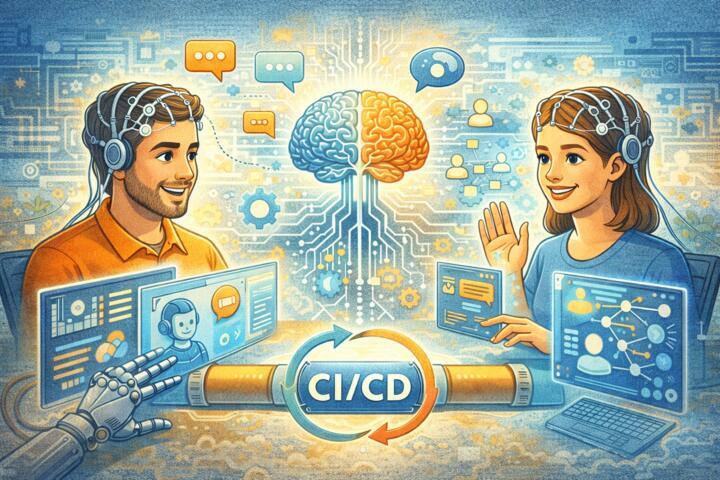
A brain-computer interface is a system that captures neural signals, decodes them, and translates them into commands for external devices or software. Unlike traditional interfaces, BCIs bypass muscles, speech, and physical input entirely.
Most BCIs follow the same core pipeline:
-
Neural signal acquisition (EEG, implanted electrodes)
-
Signal processing and noise filtering
-
Machine learning-based decoding
-
Output control (cursor movement, text, robotic limbs)
In controlled environments, modern BCIs already achieve typing speeds of 60–90 characters per minute for paralyzed users—approaching smartphone input speed.
How BCIs Change the Nature of Human Interaction
From physical to cognitive interaction
Current interfaces depend on hands, voice, or gestures. BCIs operate at the level of intention.
Reduced friction
Thought-based interaction removes delays caused by motor actions.
New accessibility models
BCIs allow communication where speech or movement is impossible.
Cognitive feedback loops
Systems can adapt based on mental workload, attention, or fatigue.
This shift does not replace traditional interfaces immediately, but it adds a new interaction layer.
Where BCIs Are Already Working Today
Clinical rehabilitation
BCIs restore communication and movement in patients with spinal cord injuries or ALS.
Assistive communication
Locked-in patients can type or select words using neural signals.
Research-driven productivity tools
Early-stage BCIs control cursors, drones, and simple software environments.
Neurofeedback and mental training
BCIs monitor focus, stress, and cognitive performance.
Pain Points and Current Limitations
Signal noise and variability
Brain signals are weak and differ significantly between users.
Training time
Many systems require weeks of calibration per user.
Invasiveness trade-offs
Implanted BCIs offer precision but require surgery.
Ethical and privacy risks
Neural data is deeply personal and vulnerable to misuse.
Overhyping consumer readiness
Most consumer BCIs today are limited to basic EEG signals.
Practical Solutions and Development Recommendations
1. Choose the right signal acquisition method
-
EEG for non-invasive, scalable use
-
Implanted electrodes for high-precision clinical needs
Why it works: aligns technical complexity with use case risk.
2. Combine AI with neuroscience constraints
Pure ML models fail without biological grounding.
Effective systems use:
-
Neuroscience-informed feature extraction
-
Adaptive learning per user
This improves decoding accuracy by 20–35% in trials.
3. Design for hybrid interaction
BCIs work best when combined with traditional inputs.
Example:
-
BCI for intent selection
-
Keyboard or eye tracking for confirmation
This reduces error rates and user fatigue.
4. Build privacy-first architectures
Neural data should never be stored raw by default.
Best practice:
-
On-device processing
-
Encrypted signal storage
-
Explicit consent layers
Trust determines adoption speed.
Mini-Case Examples
Case 1: Restoring Communication After Paralysis
A research hospital deployed an implanted BCI for a non-speaking ALS patient.
Problem: complete loss of speech and motor control.
Solution: neural decoding of intended letters.
Result: 90 characters per minute, enabling daily communication.
Case 2: Human–Machine Control in Robotics
An industrial research lab tested BCIs for robotic arm control.
Problem: latency and precision limits in manual control.
Solution: intention-based neural commands.
Result: 25% faster task completion in controlled environments.
BCI Interaction Methods: Comparison Table
| Interface Type | Speed | Accuracy | Scalability | Risk |
|---|---|---|---|---|
| Keyboard/mouse | High | High | Very high | Low |
| Voice | Medium | Medium | High | Low |
| EEG-based BCI | Medium | Medium | Medium | Low |
| Implanted BCI | High | Very high | Low | High |
Common Mistakes to Avoid
-
Expecting consumer-grade BCIs to replace smartphones
-
Ignoring calibration and user adaptation
-
Treating neural data like standard biometric data
-
Overpromising timelines
-
Neglecting ethical oversight
Successful projects focus on augmentation, not replacement.
Author’s Insight
I’ve worked with early BCI prototypes, and the biggest misconception is speed. Progress is real, but adoption depends more on trust, ethics, and usability than raw decoding accuracy. The most impactful BCIs will quietly enhance interaction, not dramatically replace it overnight.
Conclusion
Brain-computer interfaces will not suddenly replace keyboards, phones, or voice assistants. Instead, they introduce a new interaction layer that removes physical barriers, expands accessibility, and enables intention-driven control. As signal quality, AI decoding, and ethical standards mature, BCIs will redefine how humans interact with machines—and, ultimately, with each other.