Summary
AI tutors are reshaping education by adapting content, pacing, and feedback to each learner instead of forcing everyone into the same curriculum. These systems address long-standing problems such as uneven learning speeds, lack of individual feedback, and high dropout rates. This article explains how AI tutors work in practice, where schools and platforms fail, and how to implement personalized learning that delivers measurable outcomes.
Overview: What AI Tutors Actually Do
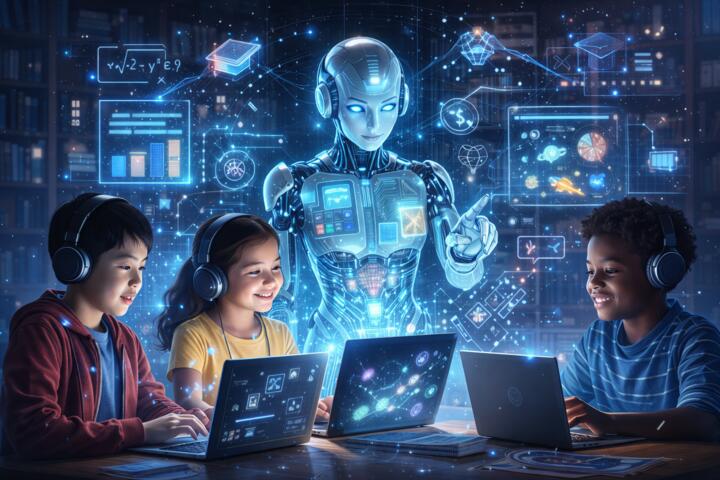
AI tutors are not simple chatbots or digital textbooks. They are adaptive learning systems that continuously adjust instruction based on learner behavior, performance, and context.
A modern AI tutor typically combines:
-
learner modeling (knowledge gaps, pace, preferences),
-
content adaptation (what to show next and how),
-
real-time feedback (hints, explanations, remediation),
-
progress prediction (risk of failure or dropout).
For example, Duolingo uses AI-driven difficulty adjustment that recalibrates exercises after every interaction. According to company data, learners using adaptive paths complete lessons 34% faster than those on static curricula.
In higher education, platforms like Khan Academy report significant learning gains when students receive AI-generated hints instead of generic solutions.
The global adaptive learning market is expected to exceed $20 billion by 2030, driven by demand for scalable personalization.
Main Pain Points in Personalized Education
1. One-Size-Fits-All Content
Many institutions still use the same materials for all learners.
Why it matters:
Students progress at different speeds. Uniform pacing leads to boredom for advanced learners and frustration for others.
Real consequence:
In large online courses, completion rates often fall below 10% due to lack of personalization.
2. Superficial “Personalization”
Some platforms label basic branching logic as AI tutoring.
Problem:
Static rules fail to adapt to real learning behavior over time.
Example:
Students repeatedly fail quizzes, but the system does not change teaching strategy—only repeats content.
3. Lack of Actionable Feedback
Generic feedback like “Try again” does not explain why an answer is wrong.
Impact:
Learners stagnate and disengage, especially in STEM subjects.
4. No Integration With Human Teachers
AI tutors are often deployed in isolation.
Result:
Teachers cannot see insights, predict struggles, or intervene early.
Solutions and Practical Recommendations
Build a Learner Model First
What to do:
Create dynamic learner profiles tracking:
-
mastery by concept,
-
error patterns,
-
response time,
-
engagement signals.
Why it works:
Accurate learner models enable targeted instruction instead of guesswork.
In practice:
Carnegie Learning uses cognitive models that adapt math instruction, improving test scores by 20–25% in pilot schools.
Use Micro-Adaptive Content
What to do:
Adapt not just lessons, but:
-
examples,
-
explanations,
-
difficulty,
-
feedback style.
Tools and methods:
-
Bayesian knowledge tracing
-
reinforcement learning
-
mastery-based progression
Results:
Micro-adaptation increases retention rates by 15–30% compared to linear courses.
Prioritize Feedback Quality
What to do:
Replace binary “right/wrong” feedback with:
-
step-by-step hints,
-
misconception detection,
-
alternative explanations.
Example:
AI tutors in Coursera provide personalized hints in coding courses, reducing repeated errors by 40%.
Integrate AI Tutors With Teachers
What to do:
Provide dashboards showing:
-
struggling students,
-
concept-level gaps,
-
predicted dropout risk.
Why it works:
Teachers intervene earlier and more precisely.
Outcome:
Institutions using predictive alerts report 10–15% higher course completion.
Mini Case Examples
Case 1: Adaptive Math Tutoring
Organization: Carnegie Learning
Problem: High failure rates in middle-school math
Solution: AI tutor with cognitive skill modeling
Result:
-
Test scores increased by 22%
-
Teacher workload reduced by 30%
Case 2: University Retention Support
Institution: Georgia State University
Problem: High dropout rates among first-year students
Solution: AI-powered tutoring and predictive alerts
Result:
-
Graduation rate increased by 21 percentage points
-
Millions saved in lost tuition
AI Tutor Comparison Table
| Platform | Strength | Best Use Case | Limitation |
|---|---|---|---|
| Duolingo | Real-time adaptation | Language learning | Limited subject depth |
| Khan Academy | Concept mastery | K–12 education | Less personalization at scale |
| Coursera | Skill-based feedback | Professional learning | Requires high-quality data |
| Carnegie Learning | Cognitive modeling | Math/STEM | Higher implementation cost |
Common Mistakes (and How to Avoid Them)
Mistake: Treating AI tutors as replacements for teachers
Fix: Position them as assistants, not substitutes
Mistake: Ignoring data quality
Fix: Continuously audit learning data and bias
Mistake: Overloading students with feedback
Fix: Deliver fewer, higher-quality interventions
Author’s Insight
I’ve worked with adaptive learning systems where the biggest gains came not from smarter AI, but from better feedback design. Personalization fails when systems optimize for engagement instead of understanding. The most successful AI tutors respect cognitive limits, support teachers, and focus on mastery rather than speed.
Conclusion
AI tutors are transforming education by making personalization scalable and measurable. Success depends on learner modeling, adaptive feedback, and tight integration with human educators. Institutions that treat AI tutoring as infrastructure—not a feature—achieve better outcomes, higher retention, and more equitable learning experiences.